Keeping Things in Proportion: 3 Easy Outfit Formulas
Get out of your outfit rut. This guide breaks down three style formulas to refresh your wardrobe, with tips on how to make each one your own.
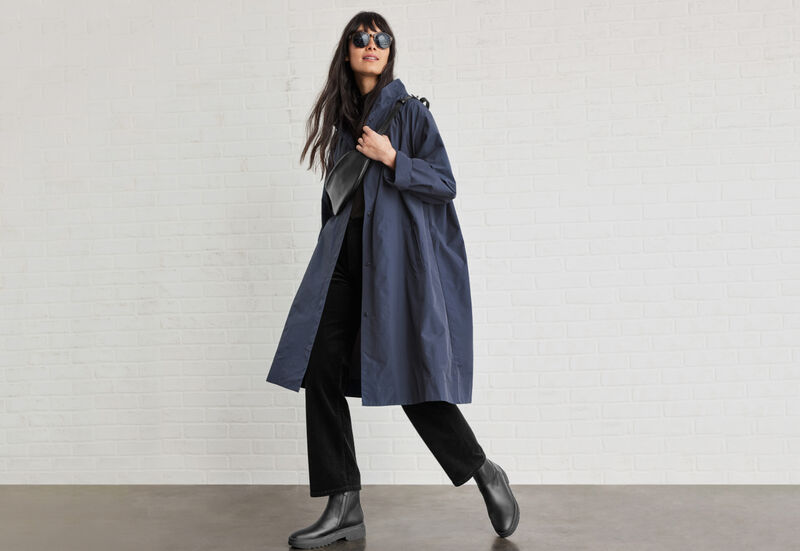
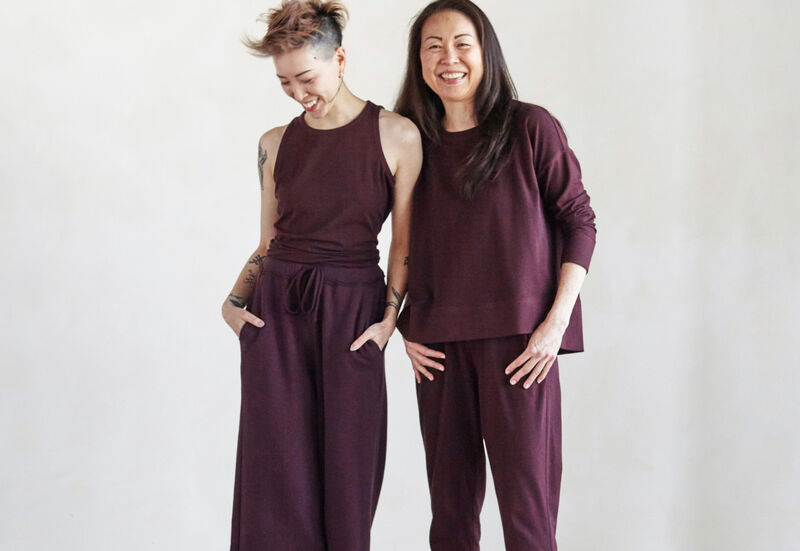
Plenty of clothes, zero inspiration? Here’s the secret: You don’t need new pieces—you need a new perspective. Dressing with an eye to proportion can help you unlock creative possibilities. How? Proportion play is about shifting how pieces relate to each other and seeing what surprises you. A long jacket with a full-length trouser, a wide leg with a slim top, or volume where you usually keep things fitted can change your whole outfit—and your outlook.
This guide is your invitation to mix things up. We'll explore three silhouettes that feel both timeless and of the moment, plus we’ll go over practical tips to help you make each one work for you. Small adjustments, strategic layering and an open mind can turn an unfamiliar proportion into a new favorite.
Try this at home: Mix, match, play—
and learn how to make each of these formulas your own.
Why It Works
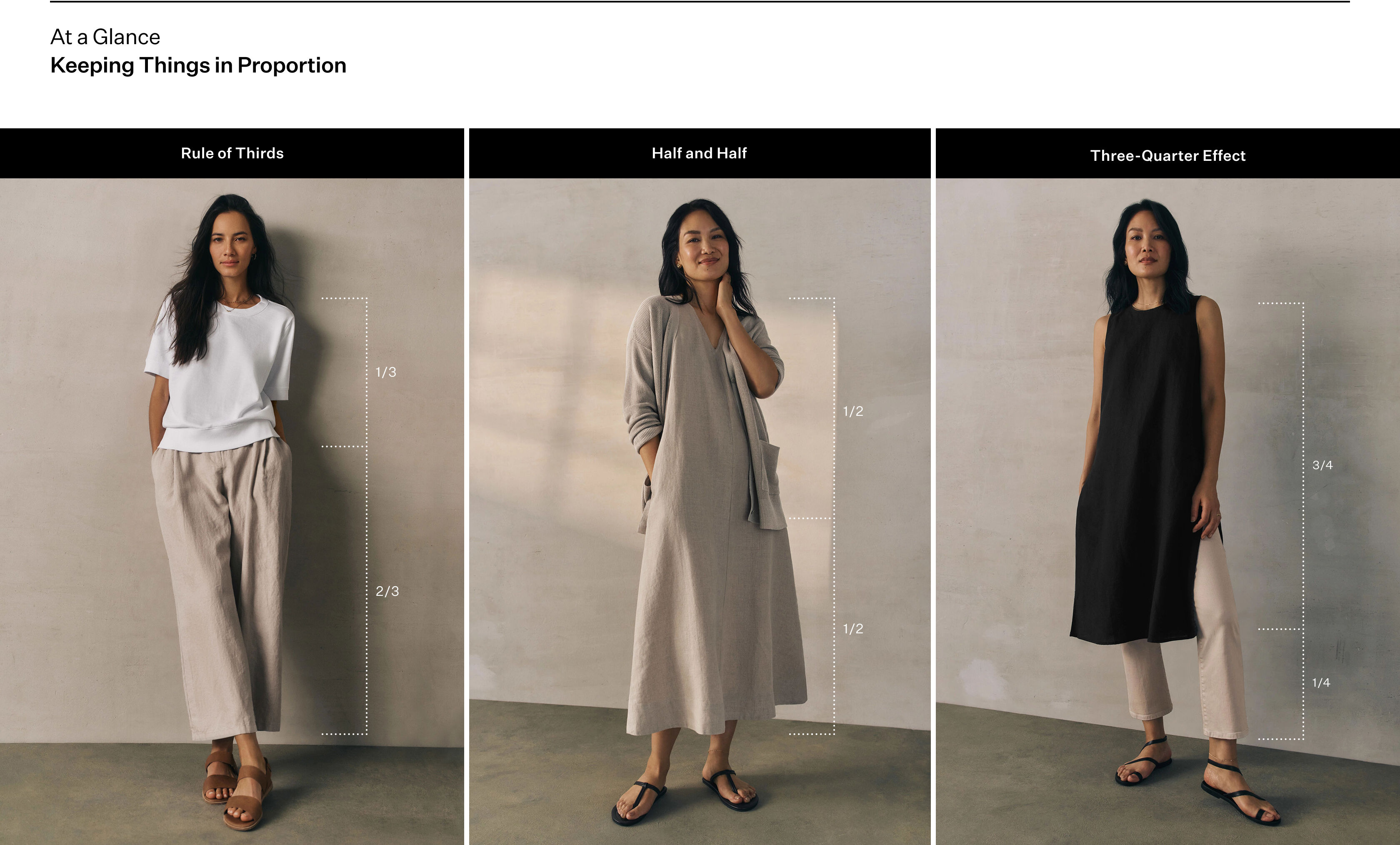
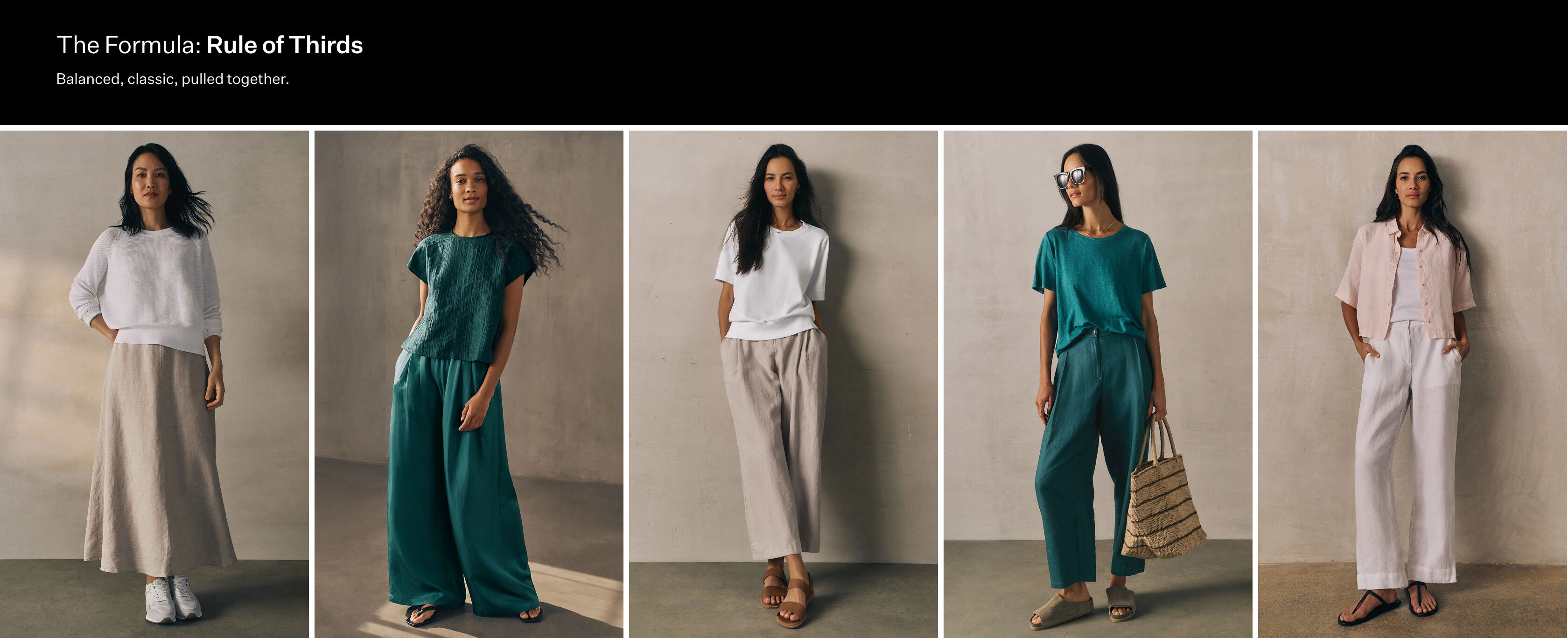
An age-old styling formula for one simple reason: It’s universally flattering. The rule of thirds breaks the body into three parts—specifically 1/3 top and 2/3 bottom. To put this into practice, pick any bottoms and pair with a top that hits at your natural waist (roughly level with your belly button) to create the 1:2 ratio. Why is it magic? This proportion tricks the eye into perceiving longer, leaner lines.
In the Dressing Room: Problem Solving 101
How can I add more oomph to my outfit?
Solution: Go big and bold.
Voluminous skirts, lantern pants, wide-leg trousers, boxy tops—anything goes. As long as you maintain the 1:2 ratio, you can mix, match and play while creating a naturally balanced silhouette.
What if none of my tops are the right length?
Solution: Tuck it in.
No waist-length tops, no problem. Tuck your tee or sweater into your waistband for an instant proportion shift.
I prefer more hip coverage. Can this proportion still work for me?
Solution: Layer strategically.
Start with a long tank for coverage, layer a shorter cardigan or jacket on top. We suggest matching the color of your underpinning to your pants—it creates an unbroken line, so the eye is naturally drawn upward.
What if I prefer more fitted silhouettes?
Solution: Control the volume.
Slim silhouettes are always an option, but if you want to push your edge, try a wedge top. This shape is relaxed through the bust and snug at the waist, which creates definition and balances full skirts or pleated trousers.
A Few Key Pieces
A Few Key Pieces


Why It Works
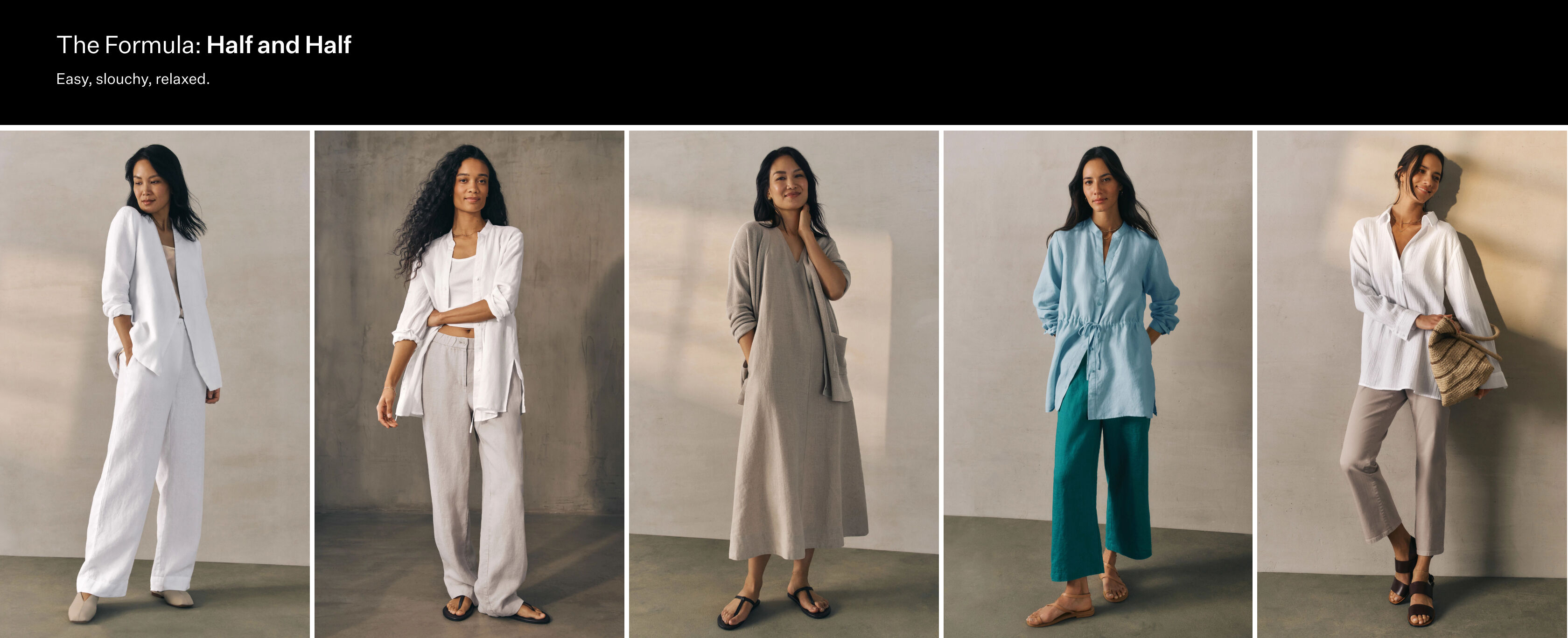
Some style guides call the half-and-half formula unbalanced. We call the rules outdated. Sure, this proportion can be a bit trickier to get right, but the payoff is a look that has that modern je ne sais quoi. Experiment with cardigans, shirts and jackets that hit around fingertip length—and don’t shy away from volume or statement pieces.
In the Dressing Room: Problem Solving 101
My outfit doesn’t feel intentional. How can I create more visual harmony?
Solution: Make it monochrome.
Try wearing a single color or shade from head to toe. By removing the high color contrast between your top and bottom, you create an unbroken vertical line that gives the illusion of length.
Fingertip-length layers draw attention to the widest part of my body. How can I create more balance?
Solution: Rethink your hemline.
The trick is to avoid a sharp horizontal line at the widest part of your hips. Look for jackets with an angled front or tops with a shirttail hem to draw the eye upward. Another tip: Try leaving the last two buttons of your shirt undone to create movement.
How can I give my outfit more attitude?
Solution: Pump up the volume.
Oversized shirt, oversized attitude. The key is to find the right pieces, ones with clean lines in fabrics that drape. We generally recommend going up two sizes. Extra credit: Pair a big shirt or sweater with roomy, full-length bottoms. Click here for more tips on styling oversized clothes.
I prefer less boxy silhouettes. Any tips?
Solution: Define your waist.
Look for layers with drawstrings or ties that let you adjust the shape, or choose tops that subtly flare at the hem. These details add softness and femininity to an otherwise slouchy silhouette.
A Few Key Pieces
A Few Key Pieces


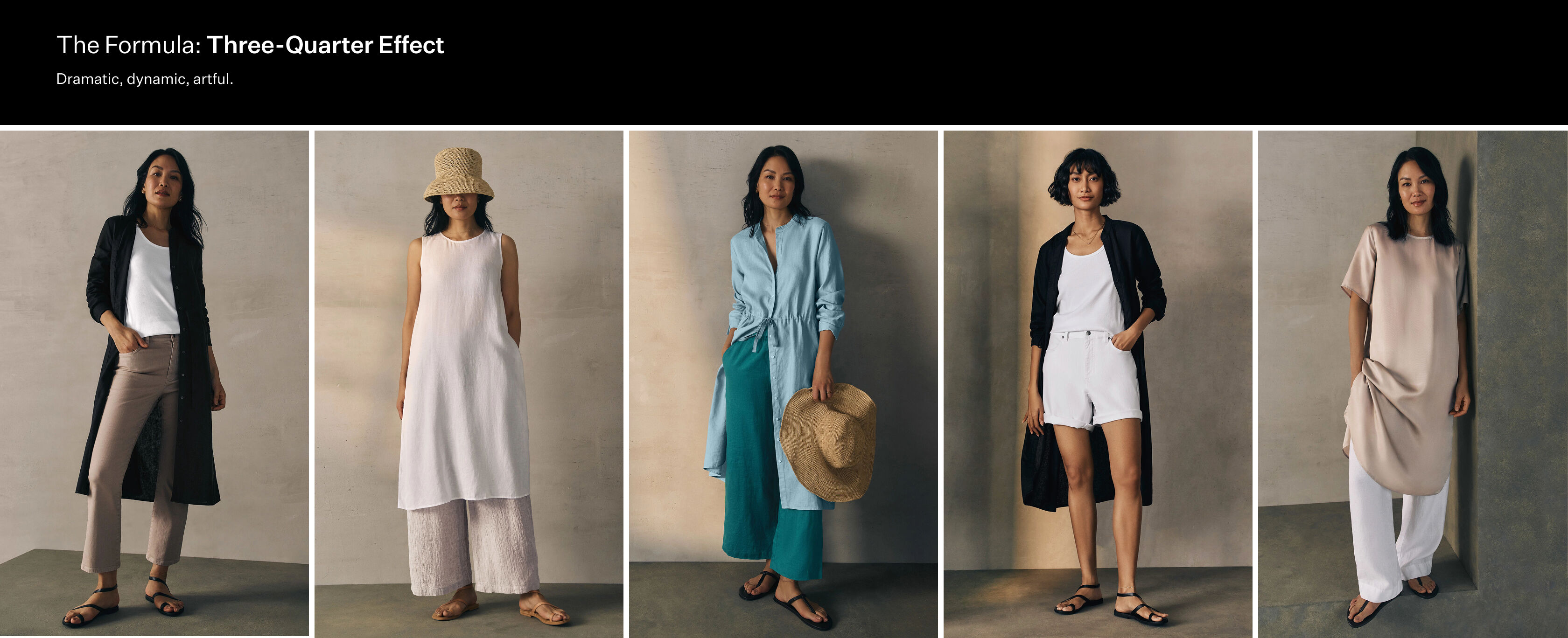
Why It Works
This formula follows the same principles as the rule of thirds, but in reverse. You now know that a 1:2 or 2:1 ratio creates natural balance and harmony. By adding long layers, you can maintain a strong vertical line while dialing up the drama. Start with a calf-length dress, cardigan or duster and pair with trousers or a skirt—or shorts for a twist. Slim pants and leggings are a natural choice for this formula, but don’t be afraid to wear wide-leg pants.
In the Dressing Room: Problem Solving 101
My outfit needs more pop.
The solution: Embrace color.
Is neutral your comfort zone? This formula makes it easy to experiment with bold color. Start with a vibrant pant or skirt, then layer a neutral shirtdress or duster to ground the look—letting just a hint of color peek through.
Long layers make me look shorter. How can I maintain height?
The solution: Optimize your base layers.
This tip works for all body types—but it’s particularly effective for petites. Keep your base layers to a 1:2 ratio (for instance, a tank tucked into high-waisted pants; see rule of thirds above), then throw a long layer on top. An open cardigan or duster frames your outfit and adds visual interest, but your eye is drawn to the naturally balanced and elongating proportion underneath.
My outfits never look like the ones I see on Pinterest. What can I do?
The solution: Give it a zhuzh.
Never underestimate the power of small styling tweaks. Try scrunching up your sleeves, rolling up your pant cuffs, tucking in your top, popping that jacket collar or undoing the last buttons of your shirt. These seemingly minor refinements can truly make the look. Next time you find yourself in the dressing room wondering why your outfit feels flat, pull out some of these signature styling tricks—you just might see yourself in a whole new light.
My body gets lost in long layers. How can I create more balance?
The solution: Show a little skin.
Try a cropped pant or roll up your shirt or pant cuffs. A glimpse of wrist or ankle draws the eye to the narrower parts of your body and helps control the volume. Another go-to trick: Opt for sleeveless or short-sleeved layers.
A Few Key Pieces
A Few Key Pieces